Source Coffee Tamper and Portafilter Set for Cafe Restaurant Home
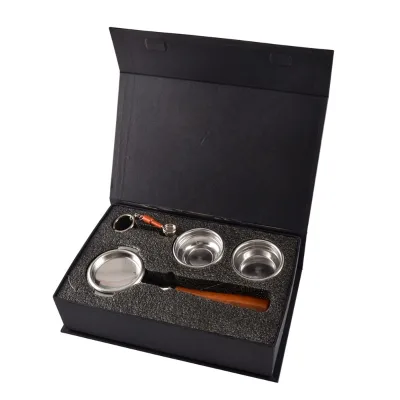
Compare 30 coffee tamper and portafilter set options from verified Chinese suppliers. Browse stainless steel and metal models with customizable logos, eco-friendly features, and standard sizes for cafes, restaurants, and home use.
Key considerations
Products List


Comprehensive Sourcing Guide
Strategic Sourcing Guide for Coffee Tamper and Portafilter Sets
The global demand for high-quality espresso equipment has driven a significant shift in how procurement professionals source coffee tamper and portafilter sets. These tools are not merely accessories but critical components that determine the consistency and quality of the final beverage. For buyers operating in the B2B sector, understanding the technical nuances, compliance requirements, and supply chain dynamics is essential. This guide synthesizes available market data to provide a disciplined approach to sourcing these specific coffee tools, focusing on materials, specifications, and supplier evaluation criteria without relying on unverified claims.
Technical Specifications and Material Composition
The foundation of a reliable coffee tamper and portafilter set lies in its material composition and dimensional accuracy. Based on observed market data, the primary materials utilized in these products are Stainless Steel and general Metal. Stainless Steel is frequently cited as a key attribute, offering durability and resistance to corrosion, which is vital in the humid environments of cafes and commercial kitchens. The metal construction ensures that the tools can withstand the high pressure required for espresso extraction without deforming over time.
Dimensional standardization is perhaps the most critical technical specification for these sets. The market data indicates specific standard sizes of 51mm, 53mm, and 58mm. These measurements correspond to the diameter of the portafilter baskets used in various espresso machines. A mismatch in size can lead to uneven tamping, channeling, and poor extraction. Buyers must verify that the product specifications explicitly state compatibility with these standard sizes. The data also highlights a "Suit for 51MM/53MM/58MM" standard, suggesting that some manufacturers produce sets designed to accommodate multiple basket sizes, either through interchangeable bases or specific sizing options.
The functional design of the tamper is equally important. The primary function is to press coffee powder, ensuring a uniform density across the coffee bed. Some listings describe the product as a "Coffee Distributor" with the function to distribute coffee grounds, indicating a two-step process where distribution precedes tamping. The style of these tools varies, ranging from "Fashionable" to "Minimalist," with color options including "Multicolor," "Bicolor," and "As Shown." While aesthetics play a role in retail appeal, the structural integrity of the handle and the flatness of the base are the non-negotiable technical requirements. The product models identified in the market, such as YE05, YE02, YF11, and various CR series models (CR Coffee Tamper 03, 04, 07, 08), suggest a diverse range of designs, but the underlying mechanical function remains consistent: to compress coffee grounds effectively.
Compliance and Certification Verification
In the B2B procurement of food-contact equipment, compliance with international safety standards is a mandatory prerequisite. The supplied data confirms that suppliers in this category often hold certifications such as EEC, CIQ, LFGB, FDA, and CE / EU. These certifications are not merely marketing labels but represent adherence to strict regulations regarding materials safety.
LFGB (German Food and Feed Code) and FDA (US Food and Drug Administration) certifications are particularly relevant for products intended for use in the United States and Europe. They verify that the stainless steel and metal components do not leach harmful substances into the coffee. Similarly, CE / EU certification indicates conformity with health, safety, and environmental protection standards for products sold within the European Economic Area. The presence of EEC and CIQ certifications further reinforces the product's eligibility for export and sale in regulated markets.
When evaluating potential suppliers, buyers should request valid certificates for these specific standards. It is crucial to verify that the certification applies to the specific material composition of the product, such as the stainless steel used in the tamper base. The data also mentions "Eco-Friendly" and "Sustainable" features, which may relate to the manufacturing process or packaging. However, buyers should treat these as observations and request specific documentation regarding the sustainability claims, such as recycled material content or energy-efficient production methods, rather than accepting them as generic attributes. The "Customized" and "Customized Logo Acceptable" attributes indicate that branding is a common requirement, but this customization must not compromise the structural integrity or the certified material properties of the final product.
Cost Drivers and Pricing Dynamics
Understanding the cost structure of coffee tamper and portafilter sets is essential for budgeting and margin analysis. The observed listed price range in the market spans from $3.8 to $260 USD. This wide variance indicates a highly segmented market catering to different tiers of buyers, from budget-conscious startups to premium specialty coffee retailers. The lower end of the price spectrum likely corresponds to basic metal or stainless steel models with standard packaging, while the higher end may include premium finishes, specialized ergonomic designs, or sets that include multiple accessories.
Several factors drive these costs. Material quality is a primary driver; high-grade stainless steel commands a higher price than generic metal alloys. The complexity of the manufacturing process, including precision machining for the 51mm, 53mm, and 58mm standards, also influences the unit cost. Customization is another significant cost factor. The data confirms that "Customization" and "Customized Logo" are available services. Adding a custom logo, selecting specific colors like "Bicolor" or "Multicolor," or opting for specialized packaging such as "White or Color Box" or "Carton" will increase the per-unit cost.
Minimum Order Quantity (MOQ) is another critical cost driver. The observed MOQ range is 1 to 500 units, with specific listings showing an MOQ of 50 or 50 PCS. Higher volumes generally result in lower per-unit costs due to economies of scale. Buyers must balance their inventory needs with their cash flow constraints. The "Lead Time" of 15 days is a standard benchmark observed in the data, but this can vary based on the level of customization and current production capacity. For large orders requiring custom logos or specific packaging, lead times may extend beyond the standard 15 days. Buyers should factor these logistical timelines into their procurement planning to avoid stockouts.
Typical Applications and Usage Scenarios
The versatility of coffee tamper and portafilter sets allows them to be deployed across a wide range of commercial and residential settings. The data explicitly lists usage scenarios including "Home," "Hotel," "Restaurant," "Office," "Cafe," "Lounge Areas," and "Offices." This broad applicability suggests that the product design is robust enough to handle both high-volume commercial use and the more intermittent usage patterns found in home or office environments.
In a commercial setting such as a cafe or restaurant, the tools must withstand continuous use throughout the day. The "Stocked" and "Sustainable" attributes imply that these products are often kept in inventory for immediate deployment, which is crucial for high-turnover businesses. The "All Season" attribute further supports the idea that these tools are suitable for year-round operation regardless of environmental conditions. For hotels and offices, the aesthetic appeal of the "Fashionable" and "Minimalist" styles becomes more relevant, as these tools often serve as part of the visible service equipment.
The specific function of "Distribute Coffee Ground" and "Press Coffee Powder" highlights the dual nature of the workflow in modern espresso preparation. In high-volume environments, efficiency is key, and tools that streamline the distribution and tamping process can significantly reduce preparation time. The "Single" and "Sets" piece configurations allow buyers to purchase individual tools or complete kits depending on their operational needs. For instance, a new cafe might opt for "Sets" to ensure all baristas have matching equipment, while a home user might prefer a "Single" unit.
Supplier Evaluation and Sourcing Strategy
Selecting the right supplier is a critical step in the procurement process. The data indicates that the products originate from "China" and specifically "Guandong, China." This region is a known hub for metalworking and coffee equipment manufacturing, offering a concentration of suppliers with specialized expertise. However, the presence of multiple product models (YE05, YE02, YF11, CR series, CH-BF01) suggests a competitive market with numerous manufacturers.
Buyers should evaluate suppliers based on their ability to meet the specific technical and compliance requirements outlined earlier. Key evaluation criteria include the validity of certifications (EEC, CIQ, LFGB, FDA, CE), the consistency of dimensional standards (51/53/58mm), and the reliability of the lead time (15 days). The "Customized Logo Acceptable" attribute indicates that many suppliers are willing to engage in OEM (Original Equipment Manufacturer) or ODM (Original Design Manufacturer) partnerships. Buyers should assess the supplier's capacity for customization, including their ability to handle different packaging types like "Color Box" or "Carton" and their quality control processes for logo application.
It is important to note that the "Pieces" attribute varies between "Single" and "Sets," and the "Color" varies between "Multicolor," "Bicolor," and "As Shown." Buyers must ensure that the supplier can consistently deliver the specific color and configuration required for their brand identity. The "Product Packing" details, such as "Single Packing Size: 24011475mm," are crucial for logistics planning. Accurate packing dimensions allow buyers to calculate shipping costs and optimize container loading, which directly impacts the overall cost of goods sold.
Quality Control and Long-Term Procurement Considerations
Maintaining quality consistency over time is a challenge in global sourcing. The "Stainless Steel" and "Metal" materials are durable, but the finish and precision of the tamping surface can degrade if the manufacturing process is not tightly controlled. Buyers should implement a rigorous quality control protocol that includes checking the flatness of the tamper base and the smoothness of the handle. The "Standard" specifications of 51mm, 53mm, and 58mm must be verified with calipers during the inspection phase to ensure they meet the required tolerances.
Long-term procurement considerations involve building a sustainable relationship with suppliers who can scale with demand. The "Eco-Friendly" and "Sustainable" features suggest a growing market trend towards environmentally responsible products. Buyers should inquire about the supplier's environmental policies and whether they use sustainable packaging materials. The "Customized" nature of the products means that any changes in branding or design requirements should be communicated clearly to the supplier to avoid production errors.
Furthermore, the "Lead Time" of 15 days is a baseline. For long-term contracts, buyers should negotiate lead time guarantees and penalty clauses for delays. The "MOQ" of 50 or 50 PCS provides a starting point for orders, but buyers should discuss volume discounts and flexible MOQ terms for repeat orders. The "Single Packing Size" and "Carton" packaging details should be reviewed to ensure they meet the buyer's storage and distribution requirements. By focusing on these long-term factors, buyers can secure a reliable supply chain that supports their business growth and maintains the high standards expected in the coffee industry.
Comparative Analysis of Product Attributes
To facilitate decision-making, the following table summarizes the key attributes observed in the market for coffee tamper and portafilter sets. This comparison highlights the variability in specifications and helps buyers identify the features most relevant to their specific needs.
| Attribute Category | Observed Values / Options | Relevance for Procurement |
|---|---|---|
| Material | Stainless Steel, Metal | Determines durability and corrosion resistance. |
| Standard Sizes | 51mm, 53mm, 58mm | Critical for compatibility with espresso machine baskets. |
| Function | Distribute Coffee Ground, Press Coffee Powder | Defines the tool's role in the extraction workflow. |
| Customization | Logo, Color, Packaging | Essential for branding and retail presentation. |
| Certifications | EEC, CIQ, LFGB, FDA, CE / EU | Mandatory for legal compliance in target markets. |
| MOQ | 1 - 500 (Common: 50 PCS) | Impacts initial investment and inventory risk. |
| Lead Time | 15 Days (Standard) | Affects supply chain planning and stock levels. |
| Usage | Home, Hotel, Restaurant, Office, Cafe | Determines the required durability and aesthetic style. |
| Packing | White Box, Color Box, Carton | Influences shipping costs and retail display. |
| Origin | China, Guandong, China | Indicates the manufacturing hub and potential logistics routes. |
This table serves as a quick reference for buyers to cross-check supplier offerings against their specific procurement requirements. By systematically evaluating these attributes, buyers can make informed decisions that balance cost, quality, and compliance.
In conclusion, sourcing coffee tamper and portafilter sets requires a disciplined approach that prioritizes technical specifications, regulatory compliance, and supplier reliability. The market offers a wide range of options, from basic metal tools to premium stainless steel sets with custom branding. By adhering to the guidelines outlined in this guide, buyers can navigate the complexities of the B2B market and secure high-quality products that meet the demands of their customers. The focus on verified facts and observed data ensures that procurement decisions are grounded in reality, minimizing risk and maximizing value.
FAQs
What materials are used for coffee tamper and portafilter sets?
These sets are primarily constructed from Stainless Steel and general Metal to ensure durability and corrosion resistance. The material choice supports high-pressure espresso extraction without deforming over time in commercial environments.
Which standard sizes are available for these coffee tools?
The products are manufactured to fit standard portafilter basket sizes of 51mm, 53mm, and 58mm. Some models are designed to accommodate multiple basket sizes to ensure compatibility with various espresso machines.
Can suppliers provide custom logos on these coffee tools?
Yes, customization is available including the acceptance of custom logos on the products. Buyers can request specific branding while maintaining the structural integrity and certified material properties of the stainless steel or metal components.
What certifications do these coffee tamper sets typically hold?
Suppliers often hold certifications such as EEC, CIQ, LFGB, FDA, and CE / EU for food safety compliance. These certifications verify that the materials do not leach harmful substances into coffee during the pressing and distribution process.
How long is the lead time for ordering these coffee tools?
The standard lead time observed for these products is 15 days. This duration may vary depending on the level of customization required, such as specific packaging or logo application, and current production capacity.
What is the minimum order quantity for these coffee sets?
The minimum order quantity ranges from 1 to 500 units, with specific listings often requiring 50 or 50 PCS. Higher volumes generally result in lower per-unit costs due to economies of scale in manufacturing.
Where are these coffee tamper sets manufactured?
The products originate from China, with specific manufacturing hubs located in Guandong. This region is a known center for metalworking and coffee equipment production, offering a concentration of specialized suppliers.